WELCOME

WELCOME! For the last 19 years, about once a month, usually on a Thursday evening, a group of writers, illustrators, teachers and librarians meets in the Los Feliz area of Los Angeles to discuss children's books. Lately we have started meeting at lunch time, once every three months. Usually we talk about one picture book and one middle grade or YA novel. After the meeting, Sandy Schuckett, a retired LAUSD librarian, summarizes our discussion. Here are her reports of our thoughts about the books we have read. We'd love to have your comments too!
Thanks to Nancy Hayashi for our wonderful title art! NOTE: We are changing to a new schedule. Our meetings will now be quarterly and during the afternoon. Our group has been meeting since 2007. It was organized under the auspices of the Children's Literature Council of Southern California (CLCSC).

Showing posts with label nf. Show all posts

Thursday, June 11, 2026

THE SPIDER LADY by Penny Parker Klosterman and WHITE LIES: HOW THE SOUTH LOST THE CIVIL WAR, THEN REWROTE THE HISTORY by Ann Bausum


For an all-nonfiction meeting we started our discussion with our picture book, The Spider Lady by Penny Parker Klosterman -- a true account of Nan Songer, a young girl whose lifetime obsession with spiders and the extraction of silk from their webs led to her becoming a World War II heroine who supplied the silk from black widow spiders' webs to be used as crosshairs in guns, bombers, periscopes and other U.S. military tools. Although we all agreed that this was a great story about Nan's perseverance and learning from experimentation via her own "scientific method," sadly the physical presentation of this picture book for older readers left a lot to be desired. Here are the things we found problematical: the very light-colored text was difficult to read; the almost monotone palette of the illustrations -- which was pleasant at first -- became tedious as it continued on and most of the pictures just showed Nan working with spiders; the little blocks (sidebars) of additional information were distracting as well as being difficult to read due to lack of contrast between their text and background; the book was too long with writing that didn't really have a 'voice'; the Back Matter which did present an Author's Note and Bibliography could have presented more detailed information as well as scientific pictures of the different types of spiders shown randomly throughout the book. SO...though spider-loving middle-schoolers or science teachers would probably be intrigued with this book as a springboard to further research on spiders and/or Nan Songer, as a general read-aloud it would not really work well, due to the myriad problems delineated above.


We had a great discussion about our (much) longer YA nonfiction book, White Lies: How the South Lost the Civil War, Then Rewrote the History by Ann Bausum. We all agreed that although a very long read, this book presented many new facts about the Civil War and its causes and aftermath, and it was great that it was published during this time when some U.S. History is a victim of efforts to 'cover up' the so-called unpleasant parts. We liked that it focused on the stories of individual participants in the various scenarios that the author described. We appreciated the Introduction where the author explained why she wrote this book, but some readers were put off by the tone of anger shown by the writer, a white woman who grew up in the south, learning the 'Lost Cause' myths about the Civil War, etc. that were prevalent throughout her schooling who didn't realize the truth until much later -- after a great deal of extensive research -- which we also appreciated. We would have liked it even better if she had included more sources of personal recollections of people who were involved. Once again we were unhappy with many facets of the format: the very small text; the black print on grey paper and very small white print on black paper inserted in the middle of each chapter was hard to read, not to mention very distracting, and the extra inclusions of details of specific Civil War monuments throughout equally so. The Source Notes and extensive Bibliography in the back matter were excellent, but once again -- difficult to read due to even smaller type size; the inserted groups of pictures throughout had no specific connections with the actual text that we were reading at that point. Some readers also wondered whether YA readers of today would even pick up this book to read, but we felt it was a good resource that could be introduced by teachers and that it might be a stimulus for further student research. We thought it was "...an important book that maybe won't change anything," but we were glad that it had been written. 

 A note on format: It appears that more and more nonfiction books for young readers are being published to supposedly cater to their 'decreased attention spans.’ Many books now seem to try to emulate websites, with a lot of 'stuff' stuck in, in different fonts or print sizes, sidebars, etc. Whether this is a good thing or not remains to be seen, but as adult sophisticated readers, we have usually found it very distracting. 

Monday, November 13, 2023

SMART COOKIE by Elly Swartz and THE GARDENER OF ALCATRAZ by Emma Bland Smith


We began our November discussion with our novel, Smart Cookie by Elly Swartz. We had several issues with this book. Although we thought that the major plot point, Frankie's efforts to find a mate for her dad online after her mom's death in a thunderstorm, was a good idea, but it lacked depth. We felt that there was just too much other stuff happening -- ghosts, friendship problems, hoarding, rules, secrets, and more that got in the way of the plot and were never properly developed or resolved. We liked the relationship between Frankie and her best friend Elliot and between Frankie and her dad and grandma, but since there was so much other 'mini-plot stuff' to think about none of us really felt anything as the story proceeded. We did agree that young readers of the target age group (8-12) would probably like the book, and anything that keeps a kid reading is good.


We liked both the great opening and the tone of the writing of our picture book, 
The Gardener of Alcatraz by Emma Bland Smith, which told an easily accessible story of Elliott Michener, a convicted counterfeiter, who had been transported from Folsom Prison to Alcatraz, decided to be a 'good guy', and ultimately redeemed himself by tending the Alcatraz garden outside of the prison walls. We thought the engaging story showing that people can change would be good for young readers as they read about Elliott's passion and pride as he learned more about gardening and gained skill. We thought Jenn Ely's illustrations were well done in terms of showing facial expressions, changes in perspective, and the way that color crept into the garden that developed in a previously barren place. We agreed that the back matter, for those who would read it, was helpful in presenting further details about Elliot's life and encarceration, the Alcatraz garden, background on (usually un- or poorly-paid) prison labor, treatment of nonwhite prisoners, and other social issues. We thought the book might be especially relatable for students who had incarcerated parents or relatives, and could present some hope of redemption and transformation through the idea that one is not 'just a prisoner.'

Thursday, September 21, 2023

ATTACK OF THE BLACK RECTANGLES by A.S. King and NANO: THE SPECTACULAR SCIENCE OF THE VERY (VERY) SMALL by Jess Wade


We started with the discussion of our novel, Attack of the Black Rectangles by A.S. King. There were things about this book that we all liked: the fact that it dealt with reading, honesty, and current issues of censorship that are part of the general conversation (sadly/still!) in today's society. But most of us felt that much of the characters' 'dialog' regarding not only the fact that words had been redacted (by their teacher, Ms. Sett!) from The Devil's Arithmetic by Jane Yolen, but also long discourses re: women's rights, treatment of Native peoples by Columbus, Anglicizing a Vietnamese student's name, and other present-day issues turned 6th-grader Mac and his friends into didactic mouthpieces for the points the author wanted to make in this story. We liked the fact that Mac had been exposed to many well-known and excellent examples of children's literature, and we hoped that young readers, upon seeing those titles in this book might want to read the books mentioned. We liked the idea that Mac was encouraged to speak his mind by his mom and his grandpa, and we saw his growth as he and his friends excited the whole community of his small town and brought them on board to protest this act of censorship in front of the school board. We were somewhat puzzled by the additional storyline of Mac's dad: an impulsive, angry, and somewhat dishonest man who was obviously in the throes of some mental illness issues. Mac just wanted to know the truth about his dad, which was being kept from him and prevented him from feeling whole. But -- though the issue of honesty was emphasized throughout this book -- a couple of us felt that the story itself was somewhat dishonest in the way it ended, where the kids won, Ms. Sett promised to not redact any more books, and everyone lived happily ever after. In today's real world it unfortunately wouldn't happen that easily. We did like the emphasis on keeping an open mind and reacting with grace in uncomfortable situations which Mac consciously always tried to do. We felt that young readers would probably like this story of family, friendship, first crush, and frankness.


We had mixed feelings on our picture book, Nano: the Spectacular Science of the Very (Very) Small by Jess Wade. We thought this simplified explanation of the very complicated science of nanotechnology was basically well-done. We liked how it started in an almost poetic way with the very fundamental knowledge that youngsters have about what makes up our world. Some of us felt that when it got into more scientifically detailed explanation the text became less fun to read and seemed more like a very dryly written textbook. Most (but not all) of us thought the strangely colored illustrations were terrific, and we all liked the fact that a little girl was shown on each page exploring whatever the text was attempting to explain. We thought this was especially encouraging for young female readers who were interested in science. We liked the pages at the end that contained even more detailed explanations of nanomaterials and a brief index. We felt that most young readers would probably not pick up this book on their own, but that an adult might alert them to it and that they might enjoy it. We also felt that it was a basic introduction to nanoscience that would be valuable for middle-schoolers and even those in high school.


Thursday, April 27, 2023

COUGAR CROSSING by Meeg Pincus and GREENGLASS HOUSE by Kate Milford


Once again we were unanimous in our reactions to both of our books. Usually we begin with our picture book, but this time we decided to start with the novel, Greenglass House by Kate Milford, because we wanted to get it out of the way because -- well -- here are some of the comments: didn't finish it; too much effort/no payoff; didn't hold the reader's attention; too slow; chapters were too long; too convoluted; too complicated; couldn't figure out when/where the story happened; disengaged parents; main character, Milo, not compelling; secondary character, Meddy, not nice/too bossy; plot had too many names/stories to remember; and I could go on, but I won't. A couple of readers did finish it, and -- on the positive side, liked the natural setting, the vocabulary used in the description of the windows of the house -- varying shades of blue and green, and the fact that Milo, who was adopted, was Chinese, unlike his adoptive parents (although it took ages to get into his actual adoption story.) We did feel that some kids might like the role-playing that Meddy & Milo got into, and other aspects of the mystery, but as a whole we were far from giving it a thumbs up.


We unanimously gave a HUGE thumbs up to our gorgeous picture book, Cougar Crossing by Meeg Pincus, illustrated by Alexander Vidal. We loved the way it described the life of P-22, a local Los Angeles puma who had been born in the Santa Monica Mountains in 2009, and was ultimately tagged in 2012 by the National Park Service (NPS) in Griffith Park, miles away in the middle of northeast L.A. It appeared that he had crossed two freeways in order to make his home in the park, and this set off a huge fundraising campaign to create a wildlife crossing over a major southern California freeway. We loved the way his story was told through clear, simple text and beautiful, earth-colored (rusts, browns, blues, greens & black) collages, and further embellished on many pages with framed circular sidebars which showed a cartoon-style conversation between Miguel from the Natural History Museum and Jeff from the NPS that created a running commentary about what was happening. We thought it was a fantastic book with a fantastic story about a fantastic animal, and how his life made the wildlife crossing, which will be completed in 2025, a reality. We felt it gave a good description of how wildlife fares in a big city, and we thought young readers could learn a lot about how people and animals can co-exist. We especiall liked the Back Matter which contained a timeline of P-22's life, facts about pumas/cougars, suggestions for further research, and a great double-page spread of Wildlife of Southern California. A couple of readers questioned whether kids/teachers outside of So. Calif. would be interested in this story, but we determined that it could serve as a model for people in other areas to explore what animals might be living in their own surroundings, and what might be done to make their lives better. Sadly, P-22 died in December 2022, but many more animals of his 'tribe' will be helped by the wildlife crossing. We were glad to end our meeting with this book that we all loved.

Thursday, February 23, 2023

CURVE AND FLOW: The Elegant Vision of L.A. Architect Paul R. Williams by Andrea J. Loney and CLEMENTINE by Sara Pennypacker


We began our discussion with our picture book, Curve & Flow: The Elegant Vision of L.A. Architect Paul R. Williams by Andrea J. Loney. We all agreed that the digitally created illustrations by Keith Mallett were stunning and elegant, and that it was a very good pairing of artist and author. We felt that the issue of race, as African-American architect Paul Williams was confronted with many challenges -- 'walls' of discrimination that he had to conquer -- was treated with grace and delicacy, while clearly providing the necessary message to readers. We mostly liked the exposition and language of the text, except for a couple of readers who felt that the use of "But" at the beginning of several sentences was excessive. We also questioned the title "Curve & Flow," which was also repeated extensively as Williams' story was told, since -- other than the iconic Theme Building at Los Angeles International Airport, which IS 'curvy' and 'flowy' -- the majority of Williams other architectural creations are quite linear. We thought this might be misleading for young readers. We thought  it was a definite plus that this book covered Williams' entire life, which is very rare for even a 44-page picture book bio, since his early life with a loving family who adopted him after both parents died from lung-related illnesses was as important to who he became as were his later degrees and experiences. We wholeheartedly approved of the excellent Back Matter, which included an author's note, an extensive timeline, a list of sources, and photos of several Williams buildings. We all agreed that it was important that this book about a Los Angeles notable (for a change!) is out in the world, and that it would be a great read for all kids -- probably 3rd grade and above -- a definite inspiration for young Black readers, as well as an excellent example for all of persevering one's dream.


We had a great discussion about humor after reading our novel, 
Clementine by Sara Pennypacker, illustrated by Marla Frazee. All but one of us loved it for a variety of reasons, but one reader -- not so much. She thought it was thin, boring, lacked richness, somewhat colloquial, and not so funny. She felt that although it would probably serve to get kids into reading 'longer' books, she preferred books with role models who weren't always getting into trouble through their actions. Others of us loved the book entirely. We thought it was a well-edited, heartwarming, reassuring, tightly written book without a wasted word, and that Marla Frazee's lively black ink drawings worked perfectly with the text. We thought the vivid details of Clementine's narrative of her 8-year-old daily life were entertaining, and several of us were reminded of female heroines from books of earlier times like Eloise and Ramona Quimby. We loved the way Clementine's arty, energetic parents honored her 'out-of-the-box' way of looking at the world, as they surrounded her with love. We came to the conclusion that each reader has a different conception of what is actually funny; it can depend on age, culture, life experiences, and view of the world. We felt that Pennypacker really knows her audience of young readers, and that -- given the book's popularity -- they are eating it up.

Thursday, December 2, 2021

VINCENT AND THEO: THE VAN GOGH BROTHERS by Deborah Heiligman and THE GIRL WHO NAMED PLUTO: THE STORY OF VENETIA BURNEY by Alice B. McGinty


We started with our nonfiction 'novel': Vincent and Theo: The Van Gogh Brothers by Deborah Heiligman. Only one of us loved it; everyone else had parts they liked a lot, but thought the book was too long for what it was trying to accomplish -- a couple of readers said they couldn't finish it. Everyone liked the black-and-white reproductions of Vincent's drawings that introduced each chapter, and appreciated the fact that each one included the years covered. We all appreciated learning more about Vincent's early life and his very close -- maybe co-dependent -- relationship with his brother Theo. We appreciated the enormous amount of research the author had done, and the inclusion of direct quotes of the many letters between the brothers over the course of their short lives. We were gratified to learn about Jo, Theo's wife, who -- along with her son -- was instrumental in creating the Van Gogh Museum in Amsterdam. Although one reader felt the very simply-written text lacked passion, most of us weren't bothered by that; but even with the spare text several readers felt that it was a book for adults rather than young readers -- though a couple of us felt it could be enjoyed by high school readers who were interested in art. We all loved the fact that it spoke to Vincent's persistence in finding his way to express his deepest feelings through his art, though we wondered how much he would have done without his brother's emotional and financial help throughout his life. We all appreciated all of the end matter: the list of people involved in Vincent's life, the Timeline, the Author's note and the Endnotes. We felt it was an excellent resource, even as the writing perhaps lacked intensity or feeling.


We mostly liked our nonfiction picture book, The Girl Who Named Pluto: the Story of Venetia Burney by Alice B. McGinty; illus. by Elizabeth Haidle. We all loved the way the illustrations were fully integrated with the story of 12-year-old Venetia, a fan of astronomy and mythology, who -- on a sudden whim -- combined these two interests to come up with the name Pluto for the newly discovered planet in 1930, becoming the only child to have ever named a planet. We appreciated learning this bit of trivia, and a bit about Venetia's life -- especially her relationship with her grandfather who had the proper connections with the 'powers that be' to get her suggested name accepted by the Royal Astronomical Society. We were gratified to learn that Venetia actually got to see Pluto through a telescope when she visited the Observatory Science Center the day before her 89th birthday. One reader felt that the story was 'slight' -- pleaseant enough to read, but not showing any great initiative or struggle on Venetia's part; without her uncle's intervention, Pluto would never have gotten its name. We appreciated the author's note explaining how she created the story from known facts, and the Selected Bibliography for those interested in gaining more information. We thought the book was accessible for young readers and could also be useful for science teachers as an introduction to studying astronomy.


Two pieces of nonfiction added to our knowledge about the world.

Thursday, October 28, 2021

LOOK BOTH WAYS by Jason Reynolds and STRONG AS SANDOW by Don Tate


Greetings to all!   .....Our October Zoom meeting provided a ton of positive reactions to both of our books. We started with our novel, Look Both Ways by Jason Reynolds. Although one reader said that the first chapter completely turned her off due to the graphic discussion of bodily functions (think: nose), the rest of us -- though agreeing that this chapter was the weakest of the ten chapters -- each depicting particular middle-schoolers walking home on a certain street -- kept reading and finished the book. We thought that the first chapter, although off-putting to adults would immediately pull young readers in. We ultimately felt that this book was a masterpiece of plotting, character, and brilliantly fresh writing. We thought it was very real, respectful of the youngsters it depicted, a great examination of joy and kindness and love -- along with some realistic 'kid meanness' -- and that its intended audience of young readers would 'eat it up'. We loved how each chapter/street was a short story within itself, and presented a new world to explore, ending with the last chapter/street in which the relationship of all the characters became evident as well as other things we didn't understand earlier. We also commended the book designer, who used a small line-drawing sketch to introduce each chapter/street and how -- visually -- these drawings descended downward, so that at Chapter 10 the drawing was at the bottom of the page. We hoped that our own 'reluctant reader' would give this book another try.


We had equally positive things to say about our picture book biography, Strong as Sandow by Don Tate. All of us were happy to learn about Eugen Sandow, a body builder in the middle/late 1800s that none of us had ever heard of, and we felt the first page really made one want to read further and the vivid illustrations that bounced off the page were also enticing. We liked the layout of the book where each boxed chapter heading included the location and date where the depicted events occurred. We liked how the story flowed as it told the story of Friedrich Wilhelm Muller, a weak, sickly 10-year-old boy who -- against his parents' wishes -- worked hard at physical exercise to become --at the age of 20 --Eugen Sandow: Strongman. We thought this story was a good page-turner and could be inspirational for young readers as it described the pursuing of a dream and never giving up. We also liked the Back Matter a lot, where: 1) the Afterword elaborated on Sandow's life, where he prescribed physical fitness progams in schools and healthy diets for all; 2) simple exercises anyone could try at home were presented; 3) the Author's Note where Tate described his own experience with bodybuilding; 4) an excellent and extensive bibliography; and 5) actual citations for quotes used in the text. (This is often missing in picture biographies.) ...So great to have two books with (almost) total pluses!


Thursday, September 16, 2021

EVERYTHING SAD IS UNTRUE by Daniel Nayeri and BIDDY MASON SPEAKS UP by Arisa White and Laura Atkins and illustrated by Laura Freeman


We began with our novel, Everything Sad is Untrue by Daniel Nayeri. A few readers said they were put off at the beginning of the book due to the non-linear story development which inserted ancient Persian myths and old family history into middle schooler Daniel's explanation of his life as an immigrant kid who fled Iran with his mother and sister for religious reasons and ended up in Oklahoma. But fortunately, those doubters returned to the book and finished it and were glad they did. We all agreed that it was an amazing feat of storytelling that provided a real window into the immigrant experience as Daniel related his story with insight, wisdom, humanity, and humor. We got used to the insertions of 'Sheherezade-like' stories, and the lessons they were trying to impart. We loved learning about the ancient roots of the Persian/Iranian culture. We all loved Daniel's 'rules' -- things he figured out as he tried to reconcile his past with his present: describing the struggles of an immigrant family, the cruelty they had to endure on their journey, but holding on to his cultural identity as he faced the challenges (typical to all middle schoolers) of just trying to fit in. Some readers felt that parts of the story were shocking and gripping, with no pleasure, and very hard to read. We marveled at the strength of Daniel's mother, and were happy when his father finally showed up -- after many years -- and spoke to the class. We all agreed that perhaps this book should have been 'billed' as a YA title, or even a book for adults, since we weren't sure that younger middle-grade readers would be able to stick with it due to the very non-Western style of storytelling. But we agreed that often it's not the story, but the connection between teller and listener that's important, and we felt that this book definitely accomplished that. We agreed that it was a tribute to the human spirit and we all felt richer for reading it.


Our discussion of our nonfiction picture book, Biddy Mason Speaks Up by Arisa White and Laura Atkins and illustrated by Laura Freeman brought up several interesting issues We were all glad that it honored this African-American enslaved woman who had been brought to Los Angeles because of her talents as a healer and a midwife in the 1850s, won her freedom in an important court case, and later became a successful entrepreneur as she continued a life of standing up for herself. We loved her story, which some (not all) felt was poetically written. We also loved the colorful illustrations which included small, individual boxed photos of some of the plants Biddy used in her healing maneuvers. We did have some issues with this book however. First, we had some problems with the actual story, which, though inspiring, made it hard to tell what was real and what wasn't due to the insertion of fictional characters into a true story. We felt that a picture book biography should only include characters and incidents that were real. Secondly, we had a problem with the format. Some readers likened this book to a web page with multiple 'clickbaits'. Although some young readers might like this, we felt it was distracting. Between the Timeline, maps, photos of related historical events, plus a sidebar Glossary and a moral issue for readers to consider on almost every page, it felt like it was trying to be a reference book in addition to just presenting Biddy Mason's story. We felt that it presented just too much information to digest, and several of us read the book more than once: for the story; for the Timeline; for the photos; for the issues raised. We weren't sure kids would do this, but we also felt that it was probably OK if they just bounced around and read what interested them -- even if that interrupted the story. We thought all of that information in addition to the Back Matter was more for adults, and could be very helpful for teachers, since this book could be used in a variety of curricular areas. We appreciated the authors' excellent research and citations, and we felt that anyone who read this book would certainly learn a lot, and perhaps be moved to do further research to find out more about this amazing Los Angeles heroine.

Thursday, July 1, 2021

OUTSIDE IN by Deborah Underwood and ALL THIRTEEN: The Incredible Cave Rescue of the Thai Boys' Soccer Team by Christina Soortornvat


We enjoyed our first In Person meeting on July 1, along with two people joining us on Zoom....too bad they had to miss the great refreshments, capped by a magnificent Pavlova dessert made by Ann's very talented granddaughter. We discussed our picture book, Outside In by Deborah Underwood first. We unanimously agreed that this book was just NOT for young children, its presumed audience. The idea that 'Outside' was constantly reminding us that it was there continually helping us just didn't seem like a concept that young children would easily grasp...even with possible loving explanation by the adult reading the story. And even the little girl in the illustrations seemed to ignore everything that 'Outside' was trying to show and tell her; she was too busy reading, writing, playing with her dog -- just living her life. We did like the sensitively nuanced watercolor illustrations by Cindy Derby, but viewing the book from a distance, as a child would in a classroom read-aloud situation made it obvious that their beauty was less engaging from afar. We thought these illustrations could be valuable in an art class however...in a lesson on watercolors....otherwise -- not so much.


We had mostly positive reactions about our longer nonfiction book, All Thirteen: The Incredible Cave Rescue of the Thai Boys' Soccer Team by Christina Soontornvat. We all agreed that the author had done an excellent job in her research on this story that the world watched unravel in June 2018. This included talking in person with many of the heroic rescuers and volunteers and others involved in the saga -- an endeavor which was helped a great deal by her own father who was a fluent Thai speaker -- even though she was not. We mostly liked her straightforward writing tone, where she discussed the many very technical issues that were relevant to the rescue, and explained them clearly for young readers...probably middle- and high schoolers. Some readers liked the many sidebars which explained various technical issues in detail, as well as Thai culture, and Buddhism, both of which played a strong role in the boys' frame of mind as they endured during this heart-wrenching 18-day period when they were trapped by a flood in a cave that they had been exploring. We agreed that all of the maps, graphs, photos, and illustrations throughout the book were very helpful although a couple of readers found the appearance of the sidebars in the middle of the actual text somewhat distracting. We also liked the author's explanation at the end of why she wrote this book and how she went about putting the pieces of the puzzle together. We felt that the book could be used in so many ways in classroom situations: in science, geography, culture, religion, social studies, history, engineering, physics, weather, and political systems discussions. This very long, very dense, very heavy (in weight!!) book was definitely appreciated by all of us.

Thursday, October 15, 2020

TODOS IGUALES/ALL EQUAL--A Ballad of Lemon Grove by Christy Hale and SCARY STORIES FOR YOUNG FOXES by Christian McKay Heidicker

We began our October discussion with Todos Iguales/All Equal -- A Ballad of Lemon Grove by Christy Hale (2019), the story of the first successful school desegregation case in the United States in Lemon Grove, CA in 1921. We all agreed that this narrative of Roberto Alvarez -- an excellent student -- who, along with his other Mexican-American schoolmates was denied access to the local public school, and sent instead to an "equal" (but actually quite inferior) school for Mexican students, was an important story that had to be told. We felt that it was a good companion to a book about a similar case in 1947, involving Sylvia Mendez in Westminster, CA, Separate is Never Equal by Duncan Tonatiuh. We loved the illustrations which were brightly painted and reminiscent of the labels on the wooden crates of citrus fruits that were used in the 1920s-1940s. We also liked the pictures of the various children, and especially liked the several pages of  'Back Matter,' which presented photos of the actual people involved, more details about the case, the school board, the judge, the decision, maps, quotes, etc. What we felt was missing from this book was emotion...it was told in alternating sections of English and Spanish in a very straight-forward journalistic manner, and attempted to include too many details, while neglecting any real evidence of the feelings of the children (and their parents) involved in the lawsuit, which they finally won. We were also a bit confused by the fact that the book was based on a Corrido -- a traditional Mexican-style ballad about a historical event -- the music and lyrics of which  were produced in their entirety on the first two pages, but never mentioned again. We wished that the text of this important book had been wonderful and compelling, but we were still happy that it had been created, and we felt it had an important place in classrooms, both in 3rd-5th grade, and even in middle or high school when the issue of school desegregation was a topic of discussion as a part of the Social Studies curriculum.


Our feelings about Scary Stories for Young Foxes by Christian McKay Heidicker ran the gamut from, "I loved it" to "I couldn't finish it." Readers who loved it loved everything about it: the writing, the fact that -- although a fantasy -- it depicted descriptions and facts about the behavior of actual foxes and the places where they live, and its connections to human emotions. Other readers felt it was hard to get 'into' it due to the confusing multitude of characters, the seemingly disjointedness of the events and hopping around between genres. A couple of readers who were normally not fans of any type of horror story were completely turned off by some of the violence, and couldn't even continue reading. We felt that there would be young readers who would probably love it -- either because they love animal stories or scary stories or both, but that it wasn't a book for every reader.

Thursday, September 10, 2020

BROWN ANGELS by Walter Dean Myers and THE VANDERBEEKERS OF 141st STREET by Karina Yan Glaser

We started with our picture book, Brown Angels by Walter Dean Myers (1993). The book presents many black-and-white or sepia-toned photos of African-American babies and young children that appear to have been taken in the early 20th century. Myers began purchasing these photos in second-hand stores years ago, and had amassed a collection of thousands when he was inspired to write poetry for several of them and combine them in an album-like book. We all loved the photos showing beautiful children in their Sunday-best as they probably posed for professional photographers. We felt that each photo had a story to tell, but that, sadly, Myers -- brilliant writer that he was -- fell a bit short when it came to poetry. We did single out two that we liked: "Pretty Little Black Girl," -- a counting rhyme -- and "Jeannie Had a Giggle," which was humorous, but very real. We weren't sure that young readers would relate to the rest of the poems, since their observations seemed much more adult-like. We thought that young readers today would probably enjoy looking at the photos, and that in a classroom setting it might be fun to have students write their own poetry or stories after seeing them.

We had mixed feelings about our novel, The Vanderbeekers of 141st Street (2017) by Karina Yan Glaser. We all agreed that it was a very 'old-fashioned' book, reminiscent of The All-of-a-Kind Family or Little House on the Prairie, and that factor was a plus for some readers and a minus for others. A couple of us loved this story of a family of Mom and Dad and five children: Jessie and Isa,12-year-old twin girls; Oliver, 9; Hyacinth, 6; and Laney, 4 3/4. The family was losing their lease of their dad's childhood brownstone home in Harlem (NYC) by their seemingly grouchy landlord, Mr. Beiderman, who was feared by all. As the children tried various plans to circumvent this dire situation, five days before Christmas, they became individuals -- each with their own quirks -- and there were several plot twists that brought out each of their personalities as well as those of their parents. Everyone agreed that once they 'got into' the actual story there was suspense, and even though we knew the family would probably be able to stay in their house at the end, there were several surprises before that was actually assured. But some readers felt that the language was just too old-fashioned, and that even though the story takes place sometime after 2007, it just wouldn't grab the interest of today's kids in the 9-13-year-old reading crowd. Some felt that there was a disconnect between the language of the narrative and the way kids actually talked during the time of the story. We basically agreed that it was definitely a very 'wholesome' story and that it was great that the children were given space to figure things out and to solve their problems without hovering parents. Another issue was the fact that this seemed to be an interracial family, but that was never really clearly dealt with, which seemed unrealistic, given the time and the place. Some readers felt that this story could have taken place anywhere; and even though it was in Harlem, in New York, they really didn't get a feeling of that from the story. We learned that this book is the first in a series, and that three sequels follow. Some will read them; some will not. This discussion was a great example of why the differences in opinions and reactions to books makes our group so interesting and fun!

Thursday, June 4, 2020

MARVELOUS CORNELIUS: HURRICANE KATRINA AND THE SPIRIT OF NEW ORLEANS by Phil Binder and WE ARE THE GARDENERS by Joanna Gaines

We had our second Zoom meeting on June 4 (the first for me!!) and it went quite well. I think we are all learning how to deal with this experience in the best way in our own homes....lighting, placement of computer, how to show pictures, etc. I personally missed the Good Food that usually accompanies our discussions, and look forward to the time when we can continue -- IN PERSON -- again.

First, Michelle read Marvelous Cornelius: Hurricane Katrina and the Spirit of New Orleans by Phil Binder (2015), the story of a beloved sanitation worker in New Orleans before and after Hurricane Katrina. We loved the illustrations which we felt really gave us the feeling of New Orleans, and we also loved a lot of the lyrical language that described Cornelius, his work, and his city. We felt that the story had a folktale-like feeling..perhaps similar to 'John Henry' stories, and that it was well-done. THEN we read the author's note at the back, where we learned that Cornelius Washington was a real man, a diligent and beloved worker for the NOLA Department of Sanitation, BUT that many of the events told in the story did not actually happen, and were just included to make the story better. WHAT??? This note totally destroyed our good feelings about the book, and we felt that it could have been solved if the author had merely stated, at the very beginning, something like, "...based on life and work of Cornelius Washington" We also noted that even though 'Hurricane Katrina' is in the title of the book, only two pages are devoted to that horrific tragedy....which didn't seem exactly right. So -- we liked it, but with reservations.


Caroline read us the second book, We Are the Gardeners by Joanna Gaines (2019). We acknowledged the fact that Gaines and her husband Chip are hosts of a reality show on HGTV which deals with home decor, gardening, cooking, and other family endeavors. We liked many things about this book: the fact that the family worked together, the explanations of how they planned their garden, and the trials and tribulations of creating a large family garden, and never giving up. We liked many of the illustrations showing how the plants developed, and the explanations of the various elements that are needed for a successful garden to thrive. We were unhappy however, that there was no real explanation of the time element entailed in creating a garden -- from the first planting of the seeds to the ultimate joy of having actual vegetables to eat. We thought that could be misleading for kids (and families) who might want to try the same activity at their own homes. We also thought that the entire narrative was just too long, and would have benefited from some cuts. We weren't sure that young readers would keep reading all that was written. But -- a book with some good qualities...so -- OK!

So -- not a bad way to spend an hour online doing something we all love: reading children's books!

Thursday, June 13, 2019

LIGHTS, CAMERA, ALICE by Mara Rockliff and THE GIRL WHO DREW BUTTERFLIES by Joyce Sidman

We were very happy to read nonfiction books about the contributions of two little-known women to science and the arts. We began with our picture book, Lights, Camera, Alice by Mara Rockliff, the story of how Alice Guy Bache, who lived in France, produced, directed, filmed, colored, and edited movies as early as 1907, preceding some of the men who are usually given this credit. We were happy to know about this revolutionary woman, but after a few great beginning sentences we felt that the remaining text of this picture book didn't really do her justice. It told little about her except that she liked to tell stories and decided to create moving pictures....and we all hated the ending, which was like being dropped off a cliff. The back matter, fortunately, presented many more details about her life and work, and we felt much of that information could have been included in the text of the story, and would have definitely made it richer and more interesting. There were also links to two of her 1907 short films, which we watched on a laptop, and all agreed that she was amazingly talented as a producer/director, PLUS she had a great sense of humor.

Our longer book was about another somewhat undersung heroine: The Girl Who Drew Butterflies: How Maria Merian's Art Changed Science by Joyce Sidman. There was a considerable amount of information about this enterprising scientist/artist who, from a very young age, was fascinated by caterpillars and worms, and kept track of their metamorphosis by drawing and painting EXACT pictures of their various stages of development, including the actual plants and flowers that provided their habitats. She was the first to present insects in exactly that way, and it became the norm years later. We loved how persistent and daring she was, 'bucking the system,' and even traveling along with her daughter from Germany to Surinam in 1699...a rare action for a woman at that time. We unanimously loved her original illustrations throughout the book, which were photographically perfect, and beautifully colored. However, we were put off by many of the editorial decisions made for this book. One- or two-paged boxed explanations of various historical events/issues/entities, were seemingly inserted to present historical context but instead created breaks in the continuity of Maria's story and most of us found them annoying. We felt they could have been included in the 'back matter' or even aluded to in the text with a few explanatory sentences. We didn't object as much to the boxed quotes from Maria in Italics on yellow background throughout the book. A few readers objected to the little 'poems' that introduced each chapter...especially since Sidman is known for her poetry, which is usually much better than the 'vapid poetry', according to one reader, that was presented in this book. We were glad that we read both books and learned about these amazing women of yesteryear.

Thursday, May 9, 2019

THE REMEMBER BALLOONS by Jessie Oliveros and HOW THEY CROAKED by Georgia Bragg and Kevin O'Malley

We began with our picture book, The Remember Balloons by Jessie Oliveros. A few of our readers had a problem with the idea of using balloons as a metaphor for the memories of a lifetime as a little boy visited with his beloved grandpa who told about the many wonderful memories of his life, including those that included the boy himself. Then the balloons began to float away, until there were none left in Grandpa's hand. Most of us felt that the idea of the "memory balloons" floating away was understandable for young children, especially those who could be dealing with an older person who might be in the beginning stages of Alzheimer's disease. We liked the illustrations which were mostly black-and-white, except for the colorful balloons, and we liked the interracial family and how the drawings of each of the memories were highlighted. As the little boy worried about why his grandpa was forgetting things, and even him, we liked how his mom explained that now he would 'carry' the balloons -- and the memories -- in the form of stories he could tell. We felt this story could also be useful as a prompt for children to create and draw their own "memory balloons."

 Our reactions to our longer book, How They Croaked by Georgia Bragg & Kevin O'Malley were generally positive. We liked the way the writer used humor and many gory details to explain, in chronological order, how nineteen very famous men and women, from King Tut through Albert Einstein died. Most of their deaths were due to the lack of medical knowledge during the long-ago times when they lived. We liked the 2-or-3-page explanations of scientific or medical facts following each vignette, and we also liked the exaggerated, almost cartoon-like drawings of each person in the throes of their misery. A couple of readers felt that it would have been a good idea to also emphasize why each person was famous and their contributions to the world, as well as an accurate drawing or photo so that readers could learn what they actually looked like. One reader mentioned that her 4th-grade grandson LOVED this book, to the extent that he kept shouting, "Hey Mom!!" in the middle of reading (even tho' his mom was trying to rest!) We felt that most young readers, from fourth grade through middle school would be similarly fascinated by this book. We also had input from a REAL doctor, who also loved the book, and didn't question any of its factual exposition. We felt the book would be a good starting point to encourage young readers to explore the lives of these luminaries by reading additional factual biographies about them. We also liked the lists of source materials and the suggestions for further reading at the end.

Thursday, June 30, 2016

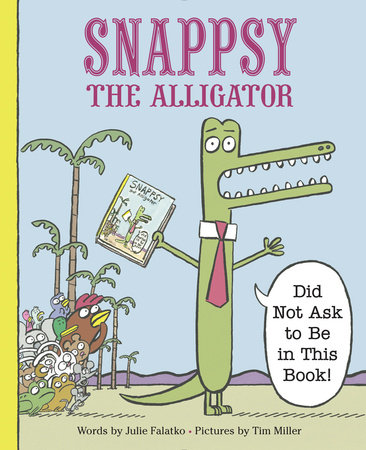
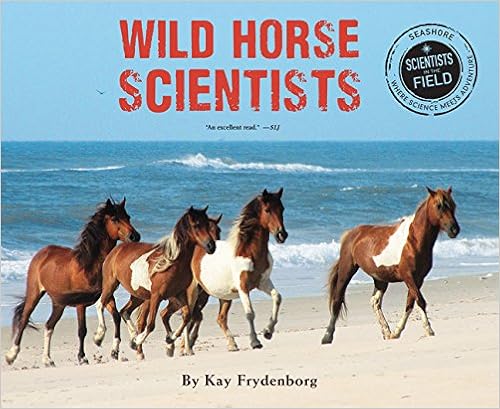
Wild Horse Scientists by Kay Frydenborg and Snappsy the Alligator by Julie Falatko

We  had terrific discussions at our last meeting, beginning with the nonfiction book, Wild Horse Scientists by Kay Frydenborg. One of our very creative members created a beautiful snack to go with the book. This same person, a died-in-the-wool long-time horse lover, said that of all the horse books she has ever read -- fiction, nonfiction, picture books, etc., this one was by far the best. We all agreed that it was quite wonderful, with beautiful photos and clearly written explanations of the detailed work of the various scientists who study the horses on Assateague Island. We felt it was an excellent example of how the scientific method works, and that it also presented a possible career path for students who were interested in horses. We felt it could be interesting for a wide range of readers -- from elementary through high school. 
Horse themed snack
We had a couple of minor carps: one was that all of the pages weren't numbered, making using the Index a bit cumbersome; another was that the sidebars -- some of which took up a few pages -- were distracting from the thread of the explanations. A couple of readers also thought it could have been better organized. We were all impressed with how the scientists figured out a way to use birth control shots for the mares so that the island wouldn't become overpopulated, given the resources that were available there. All things considered, it was a great read which presented information that none of us would have known otherwise...the sign of a good nonfiction book!

We were much less enthused with the picture book, Snappsy the Alligator by Julie Falatko. One reader stated that there was absolutely nothing about it that she liked -- not the story, not the pictures -- nothing. A few readers thought the illustrations were cute and quite humorous. One of our members said she read it with her grandchildren and they thought it was really funny and they loved it. But we adults generally felt that the premise of an author (in this case a chicken) inserting him/herself (hard to tell) into the story, and basically having a dialog with the main character (an alligator who didn't want to be in the story anyway, and felt completely misunderstood) was a very 'meta' concept, perhaps a bit too deep for young children to even understand. We talked a bit about how authors often say that "the character takes over the story" while they are writing, and we figured that perhaps this was what Julie Falatko was trying to show....but we felt that it pretty much fell flat, and definitely wouldn't be appealing to young children. Although many reviewers loved it, we didn't.
One of our members is also involved with a book group that discusses picture books by a particular publisher at each meeting. Some folks were interested in reading their blog, and it can be found here: pbpublishers101.blogspot.com. If you copy/paste it into your browser, it will be accessible.

Thursday, February 25, 2016

THE PORT CHICAGO 50 by Steve Shenkin and LAST STOP ON MARKET STREET by Matt de la Pena

Huge thanks to Monique de Varennes for providing the re-cap of our last meeting!
This month we read The Port Chicago 50, by Steve Sheinkin, and our picture book was Last Stop on Market Street, written by Matt de la Pena, with illustrations by Christian Robinson.

There was universal praise for The Port Chicago 50, a middle grade nonfiction book centering on a largely forgotten incident that occurred during World War II. After an explosion, 50 black sailors in the segregated U.S. Navy refused to return to the dangerous task of loading ammunition, and were charged with mutiny, convicted, and sentenced to prison terms.  To this day, all appeals to reverse their convictions have been unsuccessful.
We were all riveted by Steve Sheinkin’s account, feeling that the length of the book was perfect for kids just starting to explore history, and that the generous use of photos and first-person accounts brought the story to life.  We appreciated the way Sheinkin uses these events as a springboard for exploring important issues, primarily racism; he vividly portrays how the racial climate of  the time fed into every aspect of the Port Chicago events, from the all-black crews to the trial, which he clearly feels is rigged.  Historical characters like Thurgood Marshall play a part in the narrative, which also touches on issues like worker safety, and the way big institutions can be brought to change – as the Navy began its slow move toward integrating its personnel not long after Port Chicago.  Also noted was the way complex ethical questions are woven into the narrative at all levels.  We agreed that Sheinkin’s biases were clear throughout the book, but didn’t feel that posed a problem.  We were split on the quality of the writing: some thought that a slightly more literary style might inspire young readers more, while others felt his straightforward prose was forceful and well suited to the story.  As a group, though, we were moved, educated, and engaged by this book.

Last Stop on Market Street also received praise, especially for its lovely, inventive writing and delightful illustrations. The narrative focuses on the bus ride of a young boy, CJ, and his Nana, after church on a Sunday, to a destination that remains hidden until the story's end, and it describes their interaction with the colorful characters they meet on their way. Most of us agreed that the story captures a child's perspective and sense of wonder as he discovers new aspects of the world around him, always in the safe company of his Nana. On the negative side, one reader thought that the Nana was a bit too wise and optimistic, but that this excessive sweetness was countered somewhat by the character of the boy, who isn't always as positive as she is. Also, several of us felt that the book fizzled toward the end: although their surprise destination, a soup kitchen, is interesting, any tension surrounding where they're headed fades early in the story, and not much happens when they get there. However, most thought the strengths of the book outweighed the weaknesses.

Thursday, September 3, 2015

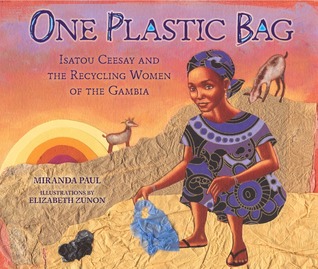
The Family Romanov by Candance Flemming and One Plastic Bag by Miranda Paul

We had a wonderful meeting this week, accompanied by several Russian-themed noshes for us to savor as we talked. We could not heap enough accolades on Candace Fleming's The Family Romanov. From the opening pages with the map of early twentieth-century Russia, the family tree showing (a lot of) inbreeding, including Hemophilia carriers, the excellent collection of photos, and the first-person narratives from people who were actually there, to the 99-item bibliography including primary and general sources, we agreed that this book was a definite tour-de-force. We all agreed that the writing almost made it seem like a novel -- and a love story at that -- and that the moving between the tsar's life with his family in the various palaces and what was going on with the 'real people' in Russia at the same time was beautifully done. We were astounded by Fleming's research, and all but two of us loved the first-person accounts that were placed throughout as incidents unraveled. One of our members felt that perhaps Fleming could have gone into greater depth about what happened after the Revolution, because it seemed that there weren't that many actual changes in the lives of the common people. But we ultimately agreed that The Romanovs were the focus, and to get too much into politics would have spoiled that focus. All in all, we found it to be an ultimately fascinating book, and we gave it a unanimous (and rare for us!) grade of 'A'.

We had mixed feelings on the picture book One Plastic Bag by Miranda Paul. We all agreed that it was a useful book for young kids: an easily accessible story about the importance of recycling and cleaning up one's environment and how one person can make a difference. We had some problems with the writing, although one of our members felt it was perfect and quite poetic. We thought there were some awkward transitions as the story progressed, and some things that didn't quite flow smoothly as Isatou Ceesay and the women of her village began to crochet little purses from the discarded plastic bags that inundated their landscape. We loved some of the illustrations, but not all of them. We felt that the difference between the very flat collage of the women's dresses clashed with the almost photographic portrayal of the women themselves and was at times jarring. We thought this might be a typical type of Gambian folk art, but it didn't resonate with everyone. Although it didn't receive an 'A' we were all glad we had read it, and we were glad to know that the women continue to create and sell the purses which has created an important income flow and benefit to their community, including a library!

Thursday, October 16, 2014

The Streak: How Joe Di Maggio Became America's Hero by Barb Rosenstock and Freedom Summer: the 1964 Struggle for Civil Rights in Mississippi by Susan Goldman Rubin

We had great discussions at our last meeting, even though there were only five of us. We all liked  The Streak: How Joe Di Maggio Became America's Hero by Barb Rosenstock, the nonfiction picture book about Joe Di Maggio for various reasons, although we were not all equally thrilled with the illustrations. Even a couple of people who dislike/know nothing about baseball liked this book. One of our members questioned the use of the words, "...America's Hero" in the subtitle, since she didn't feel that an athlete deserved to be labled such. However, as we talked about it more, and the time it occurred -- the summer of 1941, just before the U.S. entered into WWII, we agreed that Di Maggio's streak was something that truly brought the nation together. We agreed that it presented a short moment in history and baseball-lore in a great way, that it humanized Di Maggio, and that interested readers would probably want to read more about him. One person questioned why Di Maggio was held up to be such a hero, given some of his personal 'issues' (Marilyn Monroe, anyone?), but we ultimately agreed that this book merely dealt with his 56-game hitting streak, and that the rest of his life had nothing to do with this. We also liked the 'back matter' and the quotes that were shown on the endpapers. As for the illustrations: Some thought they were terrific, other's didn't. Some of us questioned the paintings' disproportionate visual portrayals of the athletes -- shown with small heads and upper bodies and huge, long legs. Others felt that the illustrations perfectly fit the story, and truly presented a picture of baseball at that time. We all agreed that it could work as a read-aloud, and that the illustrations could be easily seen and deciphered from a distance -- even with the huge legs!

For the longer nonfiction book we also had a wonderful discussion. We all agreed that Freedom Summer: the 1964 Struggle for Civil Rights in Mississippi by Susan Goldman Rubin, the story of the 1964 Goodman-Schwerner-Chaney murders in Mississippi was well-told, providing great detail about everything that happened leading up to the murders, and their aftermath. We thought the writing was quite journalistic, though very well done, and that the quotes from people who had actually lived through the various incidents added a human touch to the facts. Those who had previously known little about the Freedom Schools and the other Mississippi events of that era felt that this book truly presented a clear picture that increased their understanding. One person felt that there wasn't really a 'point of view' in the writing, even though it was excellently done. We all commended the author on her impeccable research, including the use of primary sources, and felt that the book presented essential information related to the Civil Rights struggle.

Thursday, July 26, 2012

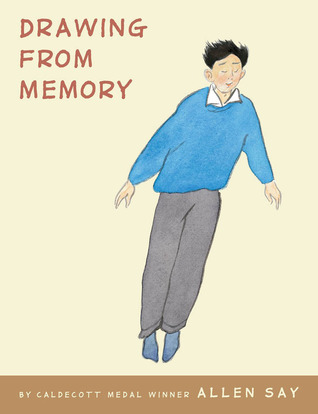
DRAWING FROM MEMORY by Allan Say and JULIE OF THE WOLVES by Jean Craighead George

Picture Book: Drawing from Memory by Allan Say (2012 Robert F. Sibert Honor):
We had a small, but passionate group at our last meeting, and a selection of very delectable (and actually healthy!!) nibbles. We were all very positive about Allan Say's Drawing from Memory. We loved the combination of his art, actual photos, and the text as he told his story of finding a mentor and becoming an apprentice, including some very emotional moments and a glimpse into his early life as a 12-year-old living alone in a small apartment in Tokyo.

Novel: Julie of the Wolves by Jean Craighead George (1973 Newbery Award; we're reading it in honor of her recent death.):
Almost everyone loved Julie of the Wolves (and yours truly was convinced to keep reading it, after 'not loving it' now as well as in 1973. Now I like it better!) We all agreed that Jean Craighead George's research into the Eskimo culture, Alaska's topography, seasons, plants, animals, etc. was impeccable, and that her descriptions provided great information and insight into all of it. A couple of us thought it would have been better if Part II had been first -- to give a better idea of who 'Julie/Miyax' was, and then going into her relationship with the wolves. Everyone agreed that it did, indeed, deserve the 1973 Newbury Award.