We had great discussions at our last meeting, even though there were only five of us. We all liked The Streak: How Joe Di Maggio Became America's Hero by Barb Rosenstock, the nonfiction picture book about Joe Di Maggio for various reasons, although we were not all equally thrilled with the illustrations. Even a couple of people who dislike/know nothing about baseball liked this book. One of our members questioned the use of the words, "...America's Hero" in the subtitle, since she didn't feel that an athlete deserved to be labled such. However, as we talked about it more, and the time it occurred -- the summer of 1941, just before the U.S. entered into WWII, we agreed that Di Maggio's streak was something that truly brought the nation together. We agreed that it presented a short moment in history and baseball-lore in a great way, that it humanized Di Maggio, and that interested readers would probably want to read more about him. One person questioned why Di Maggio was held up to be such a hero, given some of his personal 'issues' (Marilyn Monroe, anyone?), but we ultimately agreed that this book merely dealt with his 56-game hitting streak, and that the rest of his life had nothing to do with this. We also liked the 'back matter' and the quotes that were shown on the endpapers. As for the illustrations: Some thought they were terrific, other's didn't. Some of us questioned the paintings' disproportionate visual portrayals of the athletes -- shown with small heads and upper bodies and huge, long legs. Others felt that the illustrations perfectly fit the story, and truly presented a picture of baseball at that time. We all agreed that it could work as a read-aloud, and that the illustrations could be easily seen and deciphered from a distance -- even with the huge legs!
For the longer nonfiction book we also had a wonderful discussion. We all agreed that Freedom Summer: the 1964 Struggle for Civil Rights in Mississippi by Susan Goldman Rubin, the story of the 1964 Goodman-Schwerner-Chaney murders in Mississippi was well-told, providing great detail about everything that happened leading up to the murders, and their aftermath. We thought the writing was quite journalistic, though very well done, and that the quotes from people who had actually lived through the various incidents added a human touch to the facts. Those who had previously known little about the Freedom Schools and the other Mississippi events of that era felt that this book truly presented a clear picture that increased their understanding. One person felt that there wasn't really a 'point of view' in the writing, even though it was excellently done. We all commended the author on her impeccable research, including the use of primary sources, and felt that the book presented essential information related to the Civil Rights struggle.
WELCOME
WELCOME! For the last 19 years, about once a month, usually on a Thursday evening, a group of writers, illustrators, teachers and librarians meets in the Los Feliz area of Los Angeles to discuss children's books. Lately we have started meeting at lunch time, once every three months. Usually we talk about one picture book and one middle grade or YA novel. After the meeting, Sandy Schuckett, a retired LAUSD librarian, summarizes our discussion. Here are her reports of our thoughts about the books we have read. We'd love to have your comments too!
Thanks to Nancy Hayashi for our wonderful title art! NOTE: We are changing to a new schedule. Our meetings will now be quarterly and during the afternoon. Our group has been meeting since 2007. It was organized under the auspices of the Children's Literature Council of Southern California (CLCSC).
Thursday, October 16, 2014
The Streak: How Joe Di Maggio Became America's Hero by Barb Rosenstock and Freedom Summer: the 1964 Struggle for Civil Rights in Mississippi by Susan Goldman Rubin
Thursday, September 4, 2014
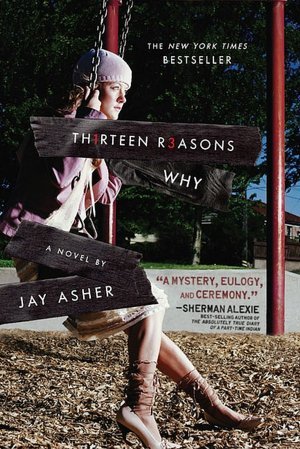
THIRTEEN REASONS WHY by Jay Asher and MR. TIGER GOES WILD by Peter Brown
We had a small group and great discussions at our last meeting. We mostly thought Thirteen Reasons Why by Jay Asher was a very important book for teenagers (and the adults who work with them) to read, since it portrayed how people's words and actions can have an affect on others -- sometimes a very negative affect. One person said she absolutely 'hated it,' and she felt it wasn't realistic for someone contemplating suicide to take the time to meticulously make tapes explaining the reasons, as well as to create a specific plan for their dispersal. We also felt that throughout the whole story we never really got to know Hannah or Clay or any of the other characters beyond the suicide-related issues. We did feel that it was good to read about Clay's remorse over not having said or done something to help Hannah, but we understood how a teen-aged boy's reluctance was probably quite normal and usual. We did agree that it was a compelling and engaging story, and we knew that many teenagers were obviously reading it as evidenced by the well-worn (and sometimes sticky!) library copies.
We all liked the picture book, Mr. Tiger Goes Wild by Peter Brown, although one of our members felt it was quite predictable and a bit didactic in its message of 'be who you are.' We loved the illustrations, which although quite stylized, provided many specific and humorous details when perused carefully, like the animals' expressions, their clothing, etc. Some of us saw a similarity between this book and Where the Wild Things Are. . .the abililty of the main character to go off and 'be wild,' and then to come back and be welcomed (even though Mr. Tiger's food wasn't still warm like Max's!!) We felt it was a great read-aloud, and that young children would probably like it and understand it.
Thursday, July 31, 2014
THE TREE LADY by H. Joseph Hopkins and THIS SONG WILL SAVE YOUR LIFE by Laila Sales
We were not completely 'blown away' by The Tree Lady. We learned
that when the author read it aloud at a writers' conference a few years ago
it had been amazing, poetic, and very moving, but evidently some editorial
changes had turned it into a very dry, completely nonpoetic entity which was
somewhat of a grind to read. Several of us were very annoyed by the phrase,
"...and she did" (or something similar) at the end of every page. We all liked
the illustrations by Jill McElmurry a lot, and agreed that the book would be useful in a school
setting to introduce a science unit on botany or to introduce the concept of
biography to young students. We also felt that it did present good information
on how the 'tree population' of San Diego, CA was created, and we felt that
perhaps students who had interest in this subject might want to read more about
it in more extensive works. [The Tree Lady is the winner of the 2014 FOCAL Award. Read more about the award and Kate Sessions (the tree lady) HERE.]
As for our novel, This Song Will Save Your Life, we had very differing opinions. One of our members said it was only "mildly interesting," and that it was a chore for her to finish the book. Many of us questioned some of the plot points, i.e. the fact that (somewhat geeky) Elisa left her house late at night and walked alone to a local warehouse district where she frequented the weekly party there, and her otherwise seemingly engaged, though divorced, parents never had a clue as to what was happening. A couple of us felt Elisa's voice came through clearly, and we could really 'get' her feelings about being an outcast, her failed suicide attempt, her need for friends, her love of music, and her relationships with Vicky, Pippa, and DJ Char as well as her classmates and family members. Others felt that her voice didn't come through at all, and, in fact seemed more like what the (probably) 30+-year-old author was trying to project about her own feelings and reactions to the (usually pretty loud) music that is a big part of the story. And, for all of the specific songs that were mentioned, we never actually learned what specific meaning they each had for Elisa -- which would have been a big plus. ...and so it goes.
Thursday, June 26, 2014
ELIZABETI'S DOLL by Stephanie Stuve-Bodeen and COUNTING BY 7s by Holly Goldberg Sloan
Almost everyone liked something about our picture book,
Elizabeti's Doll, and there were also things that various folks weren't
thrilled about. Most of us thought the last line was completely unnecessary and
actually distracting. We liked the premise of the book, and thought it was a
pleasant enough story about a little girl with a new baby brother who needed
something to care for herself and decided on a 'baby-sized' rock (her
'doll') who never cried, kept clean diapers, and slept well every night. One
person thought it was kind of 'old-fashioned' (published in 1998) and might not
even be published today. Another member strongly objected to the use of the rock
as the 'doll,' since, as the size of the rock was depicted, it would have been
way too heavy for Elizabeti to even lift. We did feel it was a good read-aloud,
and that young children could certainly relate to its premise and would probably
like it a lot.
We all loved the beginning of the story of Willow Chase in
Counting by 7s. We loved being 'in her head,' and learning who she was
as a person. But -- as the story continued on, most of us were less and less
thrilled. A couple of people couldn't even finish the book. Although we agreed
that all of the characters were very unique and well-written, we just felt that
the premise that this 12-year-old, although very brilliant and
highly-gifted, could accomplish what she did to bring a group of very quirky
people together on her behalf. We just found many of the plot points to be
completely unbelievable. One person said it sort of worked as a fairy tale, but
she wasn't crazy about it. Only one person loved everything about this book. She
loved the characters, the story, and the fact that it was all wrapped up neatly
in a happy ending, which, she said, is so rare in many of today's novels for
young people.
...and it is the differences of opinion that make our meetings so
much fun!
Thursday, April 24, 2014
THE YEAR OF BILLY MILLER by Kevin Henkes and SOPHIE'S SQUASH by Pat Zietlow Miller
Our discussion opened with one of our members saying that she did not have such great opinions of our novel, The Year of Billy Miller. She thought it had no plot, that nothing really happened, and, in fact, she was so bored with it that she couldn't force herself to finish it. The rest of us felt differently. Some absolutely loved it, others liked it a lot. We loved how it showed us the inner life of a second-grade little boy...the things he was worried about, and how he tried to take action where he could to fix the situations that bothered him. We liked how it was divided into four parts, which in a way mirrored the four seasons of the year. We felt like it was almost four separate little stories, each of which did have a plot and a conclusion. A couple of people thought that there were places where the vocabulary was too difficult for the intended readers (7 - 9-year-olds,) but others thought that good readers could understand the words through the context. We also liked the fact that it was Billy's idea that led to his father becoming a more successful free-lance artist. All agreed that it was a great read-aloud chapter book, and also a great first "long" book for beginning readers -- 240 pages!! (...in a large font) A couple of us also thought the character of Emma, Billy's nemesis, wasn't as well developed as it could have been...but maybe that's for a sequel!
Our reaction to our picture book, Sophie's Squash, was one rare unanimous vote of love! Everyone loved it! We all loved the story, the illustrations (especially the reactions on the dog's face,) the naturalness and believability of the events, how Sophie's loss of her beloved squash was treated, and how she acquired new "best friends." We liked the portrayals of the parents in both books: normal families dealing with everyday life in a loving and sensible way.
Thursday, March 20, 2014
NINO WRESTLES THE WORLD by Yuyi Morales and THE THING ABOUT LUCK by Cynthia Kadohata
At our last meeting we discussed the picture book, Nino Wrestles the World by Yuyi Morales first. Only one person really liked it a lot. Everyone else -- not so much. Some folks thought that kids who had no experience or knowledge of Lucha Libre wrestling wouldn't have much interest in this book, even though they agreed that there was a good explanation at the end and detailed descriptions in the end papers of the various 'characters' that Nino vanquished. Most people liked the illustrations, but thought that there wasn't really a story. The lone dissenter felt that it was a good depiction of a little boy participating in imaginary play, winning his bouts with all of the bigger, stronger, 'wrestlers,' and then deciding that even though his two little sisters kind of scared him, things would be better if the three of them took on the world together.
There was no unanimity in our discussion of the novel, The Thing About Luck by Cynthia Kadohata. Although we all agreed that the author had done excellent research regarding wheat farming, (she actually had spent a great deal of time on a Kansas wheat farm) we weren't thrilled with her Michener-like detailed explanations of the whole process, and hoped we would never again meet another combine or thresher in a book! A few people loved the quietness and introspection of Summer, the main character. Others weren't so impressed with it. Some thought that she had knowledge beyond her twelve years, although at other times she appeared to be very young. Someone pointed out that this is pretty normal behavior for 12-year-old girls. We agreed that as a member of a migrant farm working family she had a very hard life. We also had a hard time figuring out what the character of Jaz, her brother, actually added to the story. Everyone loved Summer's grandparents, although some of us weren't so happy with the way their pidgin-English dialog was written. But we thought the fact that they both really loved Summer came through clearly. We also liked the fact that Summer accomplished the seemingly impossible task of driving a combine (or was it a thresher??) and that the young man Mick, whom she didn't like at first, actually came to her aid and became a friend -- one that she could relate to as an older brother. Finally, we couldn't figure out why the book A Separate Peace was so important to Summer as she tried to figure out her place in life.
Thursday, February 13, 2014
Four books about Wangari Maathai: WANGARI'S TREES OF PEACE, PLANTING THE TREES OF KENYA, MAMA MITI, SEEDS OF CHANGE
At our last meeting we talked about three books, and were
introduced to a fourth, about Wangari Maathai, the 2004 Nobel Peace
Prize-winning Kenyan woman who was responsible for the creation of the Green
Belt Movement, whose goal is to plant trees in Africa.
We thought Wangari's Trees of Peace was a bit
'clunky' but we liked the colorful, almost-primitive illustratons. We felt the
book would be useful to introduce young children to Wangari's life and work, but
the amount of actual information about her was minimal, and there were many
unanswered questions regarding how the men reacted and her time spent in
jail.
One of our members, a school librarian, stated that she had used
all four books together with students, and that in this way they could compare
and contrast, and they could get the most complete picture of the life of this
amazing woman, who, sadly, died in 2011.
Subscribe to:
Posts (Atom)