WELCOME

WELCOME! For the last 19 years, about once a month, usually on a Thursday evening, a group of writers, illustrators, teachers and librarians meets in the Los Feliz area of Los Angeles to discuss children's books. Lately we have started meeting at lunch time, once every three months. Usually we talk about one picture book and one middle grade or YA novel. After the meeting, Sandy Schuckett, a retired LAUSD librarian, summarizes our discussion. Here are her reports of our thoughts about the books we have read. We'd love to have your comments too!
Thanks to Nancy Hayashi for our wonderful title art! NOTE: We are changing to a new schedule. Our meetings will now be quarterly and during the afternoon. Our group has been meeting since 2007. It was organized under the auspices of the Children's Literature Council of Southern California (CLCSC).

Showing posts with label illustration. Show all posts

Thursday, October 25, 2018

TURTLES ALL THE WAY DOWN by John Green and LIBBA: THE MAGNIFICENT LIFE OF ELIZABETH COTTON by Laura Veirs

We all had some good things to say about our novel, Turtles All the Way Down by John Green. We all liked the spotlight it put on mental illness, specifically OCD, and the way it described Aza's continual struggles with trying to lead a normal teenager's life, while feeling like her body was contaminated and coping with the constant negative thoughts that wouldn't leave her alone. We noted that the author has suffered with the same condition for years, and we felt this was his way of alerting readers to what it felt like. We liked the way her friendship with Daisy was developed, but some readers were not so happy with the way that Aza and Davis, her young male friend, communicated. A couple of readers who were John Green fans were disappointed, and felt that this story did not live up to the standards of some of his earlier books. We all agreed that the whole story of the mystery of Davis' missing father was so convoluted that it took away from the main story of Aza, her life, and her friendships, and that the final solving of the mystery was just weird and unnecessary.


We all loved the illustrations by Tatyana Fazlalizadeh in our picture book, Libba: The Magnificent Musical Life of Elizabeth Cotten by Laura Veirs. We were happy that the story of Libba, a self-taught musician and song-writer, was brought to the fore, but we found some 'nits' in the reading. We liked the lyrical quality of the text, but we felt there were gaps in the story: the way it jumped from her childhood to her adulthood; the way that, even though music was a huge part of her existence, she didn't play her guitar or sing for years. We also found the transition from her work as a store clerk to becoming the maid for the Seeger family uncomfortable. We saw a huge discrepancy in the story itself compared to the 'Back Matter' provided by the author which provided many more details, including the fact that growing up as an African-American in Mississippi in the early 1900s was quite difficult. We thought this and other facts would have created a better understanding on the part of young readers as to what Libba's life was really like.

Thursday, February 25, 2016

THE PORT CHICAGO 50 by Steve Shenkin and LAST STOP ON MARKET STREET by Matt de la Pena

Huge thanks to Monique de Varennes for providing the re-cap of our last meeting!
This month we read The Port Chicago 50, by Steve Sheinkin, and our picture book was Last Stop on Market Street, written by Matt de la Pena, with illustrations by Christian Robinson.

There was universal praise for The Port Chicago 50, a middle grade nonfiction book centering on a largely forgotten incident that occurred during World War II. After an explosion, 50 black sailors in the segregated U.S. Navy refused to return to the dangerous task of loading ammunition, and were charged with mutiny, convicted, and sentenced to prison terms.  To this day, all appeals to reverse their convictions have been unsuccessful.
We were all riveted by Steve Sheinkin’s account, feeling that the length of the book was perfect for kids just starting to explore history, and that the generous use of photos and first-person accounts brought the story to life.  We appreciated the way Sheinkin uses these events as a springboard for exploring important issues, primarily racism; he vividly portrays how the racial climate of  the time fed into every aspect of the Port Chicago events, from the all-black crews to the trial, which he clearly feels is rigged.  Historical characters like Thurgood Marshall play a part in the narrative, which also touches on issues like worker safety, and the way big institutions can be brought to change – as the Navy began its slow move toward integrating its personnel not long after Port Chicago.  Also noted was the way complex ethical questions are woven into the narrative at all levels.  We agreed that Sheinkin’s biases were clear throughout the book, but didn’t feel that posed a problem.  We were split on the quality of the writing: some thought that a slightly more literary style might inspire young readers more, while others felt his straightforward prose was forceful and well suited to the story.  As a group, though, we were moved, educated, and engaged by this book.

Last Stop on Market Street also received praise, especially for its lovely, inventive writing and delightful illustrations. The narrative focuses on the bus ride of a young boy, CJ, and his Nana, after church on a Sunday, to a destination that remains hidden until the story's end, and it describes their interaction with the colorful characters they meet on their way. Most of us agreed that the story captures a child's perspective and sense of wonder as he discovers new aspects of the world around him, always in the safe company of his Nana. On the negative side, one reader thought that the Nana was a bit too wise and optimistic, but that this excessive sweetness was countered somewhat by the character of the boy, who isn't always as positive as she is. Also, several of us felt that the book fizzled toward the end: although their surprise destination, a soup kitchen, is interesting, any tension surrounding where they're headed fades early in the story, and not much happens when they get there. However, most thought the strengths of the book outweighed the weaknesses.

Thursday, January 15, 2015

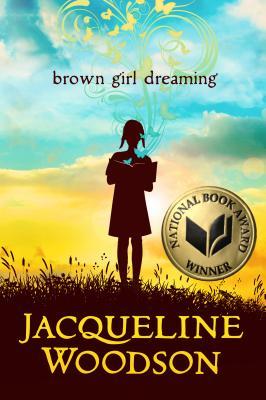
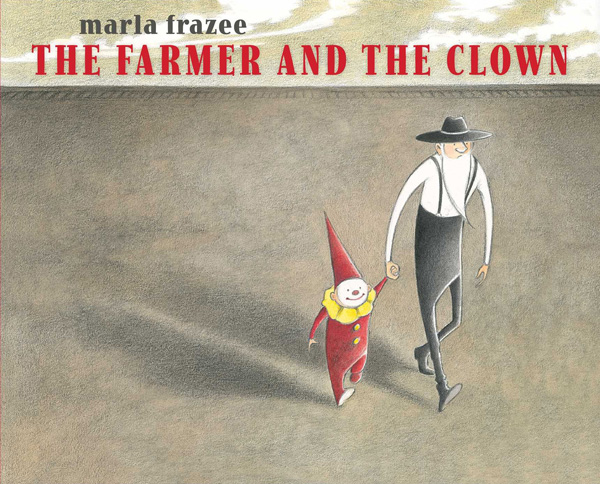
BROWN GIRL DREAMING by Jacqueline Woodson and THE FARMER AND THE CLOWN by Marla Frazee

We had a terrific meeting in January, and a quite animated discussion on our 'novel' (actually a memoir) Brown Girl Dreaming by Jacqueline Woodson. Even though this book garnered starred reviews in every library/book-related journal, and the National Book Award for Young People's Literature, the majority of our members in attendance didn't love it. Some were put off by the line breaks in the poetry; others said they didn't get a sense of how the author really felt as she experienced (as a child) some of the important moments in civil rights history as well as upheavals in her own family. However, a couple of us had a more positive take: one person said the book felt 'like a symphony,' weaving in and out and around a theme; another felt it beautifully pointed to the importance of family, teachers, words, stories, and books that went on to inform the author's desire to become a writer. Differences of opinion make for great discussions!
As for the picture book, The Farmer and the Clown by Marla Frazee, our discussion started out with everyone saying it was 'cute' and 'pleasant' and a 'nice read.' But as we discussed it further, we began to agree that it was a much deeper story about the real meaning of family, friendship, loneliness, and love. We ended up all agreeing that it was indeed a terrific book, with wonderful illustrations by the author that portrayed the feelings of the story almost as much as the text did.