WELCOME

WELCOME! For the last 19 years, about once a month, usually on a Thursday evening, a group of writers, illustrators, teachers and librarians meets in the Los Feliz area of Los Angeles to discuss children's books. Lately we have started meeting at lunch time, once every three months. Usually we talk about one picture book and one middle grade or YA novel. After the meeting, Sandy Schuckett, a retired LAUSD librarian, summarizes our discussion. Here are her reports of our thoughts about the books we have read. We'd love to have your comments too!
Thanks to Nancy Hayashi for our wonderful title art! NOTE: We are changing to a new schedule. Our meetings will now be quarterly and during the afternoon. Our group has been meeting since 2007. It was organized under the auspices of the Children's Literature Council of Southern California (CLCSC).

Showing posts with label young adult. Show all posts

Thursday, January 30, 2020

SKULLS by Blair Thornburgh and PATRON SAINTS OF NOTHING by Randy Ribay

We began our January discussion with our picture book, Skulls, by Blair Thornburgh and illustrated by Scott Campbell. We all liked the illustrations and the fact that this seemingly simple picture book raised the issue of how important our skulls are to our lives. We loved how the book began, but sadly, we felt that it became a bit boring, as certain facts were unnecessarily repeated. We tried to figure out why it was a 40-page picture book, which is unusual, and we felt that it would have worked better in the traditional 32-page format with some of the redundant parts eliminated. We liked the idea of introducing young children to this very important part of their bodies. There were a couple of page spreads that we really liked, and we liked the last page which included several facts about the skull. We thought it might work well in a school setting if combined with a more traditional nonfiction book about skulls with actual photos and more emphasis on facts. A couple of readers also felt that this could be a great book to use for 'Day of the Dead' celebrations, where images of skulls/skeletons play a big role.


We had mixed feelings on our novel, Patron Saints of Nothing by Randy Ribay. We all agreed that this story of high school senior, Jay, who travels from his home in Michigan to the Philippines to find out why his beloved cousin, Jun, was accused of being a drug dealer and killed by the government at a very young age provided a great glimpse into contemporary Filipino culture. Most of us didn't really relate to Jay, and we had minimal feelings for him, even throughout his trials and tribulations. We felt that the book was more plot-driven than character-driven. One reader felt that the whole reason for this book was to expose the current situation in the Philippines. Another reader said that she just didn't like Jay at all -- he was a self-centered, cell-phone-driven obnoxious teen-aged boy -- but she thought that the information about the current culture in the Philippines and the havoc that its despotic ruler is wreaking on its citizens was important for young readers to know. We felt that high- schoolers might like this book since they could relate with much of the angst in the story.

Thursday, December 10, 2015

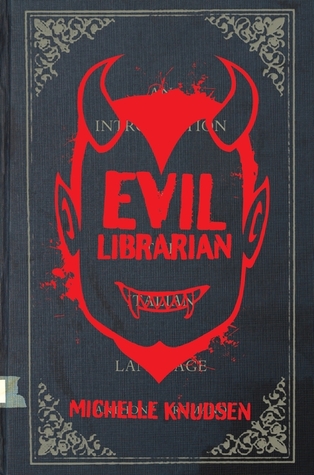
Evil Librarian by Michelle Knudsen and The Right Word: Roget and His Thesaurus by Jen Bryant

We had a delicious holiday dinner at our December meeting -- good dishes provided by all of the attendees. Big YUMS all around!
We discussed Evil Librarian by Michelle Knudsen first. Even though it won the SCBWI 2015 Sid Fleischman Award for Humor, each and every one of us kept asking, "...but what was actually funny in this book?" We'd love to have an answer from -- someone. Needless to say, we didn't love the book. We mainly felt that the story was very contrived, and that the main characters, Cyn and Ryan, were pretty much stick figures -- sort of like those that Annie might draw. We felt that we knew very little about them or their inner feelings, and it was just all very flat. Some folks said they got tired of Cyn's 'gaga over Ryan' narrative. We did actually feel that the portrayal of Annie may have been the strongest in the book. A couple of people said that they thought the descriptions of the supernatural occurrences were well written, and a strength of the book -- if the book had any strengths at all. Several people said that they couldn't even finish it. We also discussed why the author chose to have a school librarian (an endangered species!) be the 'bad guy'. Perhaps because this author also wrote Library Lion?....or -- was it purely an editor/publisher's marketing decision? If anyone who reads this blog can give some examples of humor in this book, we'd love to know!
As for our picture book, The Right Word: Roget and his Thesaurus, everyone liked it a lot; some of us loved it. We had quite a discussion about the illustrations (by Melissa Sweet), with some folks stating that the illustrations completely overpowered the text because of their details and power, while others felt that the text was very strong and stood up on its own as it described Roget's obsession with words and organizing them throughout his life. We liked the 'end matter,' and were amazed to learn of all of the other things Roget accomplished in his life. We agreed that it would be a great read-aloud in a school setting, to introduce students to the Thesaurus. We also felt that it would be a perfect companion to Jeri Chase Farris' Noah and his Words, which we discussed in February 2013 and unanimously loved. We all agreed that it was a neat book, and a great addition to the children's literature field. (Note: No Thesauri were killed in the writing of this re-cap!)

Thursday, December 11, 2014

OPENLY STRAIGHT by Bill Konigsberg and LOCOMOTIVE by Brian Floca

 We had a wonderful holiday celebration dinner at our last meeting, and great discussions of our books. We started with the novel, openly straight (sic) by Bill Konigsberg. Two people really liked it a lot, and thought that it portrayed Rafe's struggles in a good way as he explored getting rid of the label, "the gay kid." A couple of people didn't enjoy it at all because of the 'kidspeak' which they found difficult to understand and which they felt got in the way of the story. None of us particularly loved the way Rafe's parents were portrayed -- it just seemed that they were too, too cloying and positive, and not at all realistic. We all agreed that it wasn't the best literary writing ever, but that it was certainly very accessible to YA readers, and that kids of that age could certainly relate to what Rafe was going through; it could either possibly mirror their own situations, OR they could learn something about someone who was different. We also agreed that it was probably difficult for a group of heterosexual women to have any kind of an accurate idea of how Rafe really felt, even though the author created scenes and situations to give us something to think about. 
 
 
In a rare unanimous moment, we all LOVED the picture book, Locomotive by Brian Floca. There were so many things to like: the illustrations were fantastic, both in their detail, and in the fact that they told a story of a family traveling across the country on the train. Details in the illustrations brought this 'story' to life, even though it wasn't specifically mentioned in the text. We agreed that it could be used on several different levels -- as a read aloud to younger children, due to the very simple text; as a source of a wealth of information about the trains heading to the site of the hammering down of "the golden spike," as well as about the inner workings of steam locomotives; and as a kick-off point for research in a variety of curricular areas. We were all happy to have had the experience of reading it.