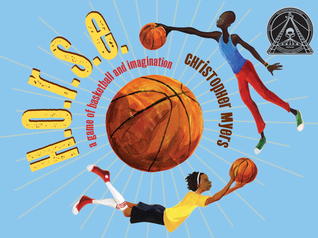
We had a small but vocal group at our last meeting. We discussed our picture book, H.O.R.S.E. by Christopher Myers first, and we all agreed that the illustrations were excellent: boldly showing the two main characters who are having the conversation, embellished with terrific collages of various New York buildings and scenes, and very well-designed, with the text appearing in arcs similar to the basketball shots they are describing. One of our members read the book aloud to us, and another said that she had absolutely NO interest in basketball, and -- in fact -- didn't read the book, but that hearing it read aloud gave her an appreciation of the language and the creativity the author/illustrator used as the two boys tried to outdo each other in their descriptions of the amazing shots they were prepared to accomplish in the game of H.O.R.S.E. We all basically liked it, although some a bit less than others, although all agreed that it was terrific for stimulating imagination and interesting use of language for young readers. We were amused that one illustration, describing a shot that transcended outer space before landing in the basket, included the illustration of an African-American man with a nametag reading, "NDGT," -- an homage to Neil deGrasse Tyson, the astrophysicist, author, and noted host of the TV program, Cosmos. We definitely felt that young readers would enjoy this book, and might even be drawn into describing their own astounding basketball shots with imagination and flowery language.
We all agreed that our novel, The Hired Girl by Laura Amy Schlitz, was beautifully written as it told the story of a 14-year-old girl from Pennsylvania who, in 1911 ran away from her family farm and an abusive father and arrived in Baltimore, where she lied about her age, changed her name, and was taken on as the "hired girl" for a prominent Jewish family. We all loved the beginning chapters and the ending chapters of this almost 300-page book, which was her actual diary in which she described her life. Several people felt that a lot of the descriptions of her daily life as she did the household work, dreamed about the clothes she would buy, and her relationships with the various family members could have been a bit shorter. One reader questioned the level of the writing in Janet/Joan's diary, saying that it seemed too sophisticated for a basically uneducated 14-year-old. Others felt it was completely believable, since she was an avid lover of reading, and had, in fact, run away from the farm when her father had burned her three cherished books, which she had read over and over and over again. Certainly, many of the entries in her diary compared her life with characters in the books she had read, and when the father of the household allowed her to read books in his library, her vocabulary and knowledge only grew. She was definitely a reader and a thinker. We agreed that young readers who might be daunted by such a long book might decide to 'give it a try,' once they found out that there was a love story between Janet/Joan and David, the family's youngest son, who dreamed of becoming an artist instead of carrying on as the proprietor of his father's department store. We all agreed that it was a pretty complicated plot, with a lot of details that perhaps didn't add much, but some thought that the inclusion of the detailed descriptions of Jewish holidays and other minutiae of daily life were valuable. But -- in the final analysis -- positive feelings all around.
WELCOME
WELCOME! For the last 19 years, about once a month, usually on a Thursday evening, a group of writers, illustrators, teachers and librarians meets in the Los Feliz area of Los Angeles to discuss children's books. Lately we have started meeting at lunch time, once every three months. Usually we talk about one picture book and one middle grade or YA novel. After the meeting, Sandy Schuckett, a retired LAUSD librarian, summarizes our discussion. Here are her reports of our thoughts about the books we have read. We'd love to have your comments too!
Thanks to Nancy Hayashi for our wonderful title art! NOTE: We are changing to a new schedule. Our meetings will now be quarterly and during the afternoon. Our group has been meeting since 2007. It was organized under the auspices of the Children's Literature Council of Southern California (CLCSC).
Thursday, April 28, 2016
Thursday, March 31, 2016
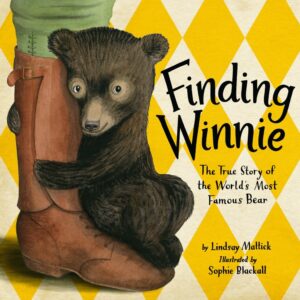
FINDING WINNIE: The True Story of the World's Most Famous Bear by Lindsay Mattick and A CROOKED KIND OF PERFECT by Linda Urban
We began
our last meeting with a discussion of the picture book, Finding Winnie
by Lindsay Mattick and illustrated by Sophie Blackall. Although we all came
prepared to say quite good things about this book, one of our members produced
and then read aloud to us another book on the exact same
subject/situation: Winnie: The True Story of the Bear who Inspired Winnie
the Pooh, written & illustrated by Sally M. Walker. Wow! It ended up
being a 'compare and contrast' discussion between these two terrific, but very
different picture books which told the story of a real bear cub who was
purchased for $20 in Canada, accompanied Harry Colebourn, a veterinarian for the
Canadian army to a camp in Europe during World War I, and ended up in the London
Zoo where she was discovered by Christopher Robin and his father A.A. Milne. We
felt that the first book, presented as a story being told to Colebourn's
toddler-looking great-great-grandson, Cole, was sweet in intention with some
quite poetically written passages, but that the many interruptions where Cole's
mom was actually telling him the story were annoying and broke the mood of the
actual story of Winnie. In the second book the story was told in a
matter-of-fact, well-written, linear style, and contained many more details
about Harry and Winnie, and we felt it would be better understood by young
readers or as a read-aloud. It also contained back matter that provided many
more details, which the first book lacked. We liked the illustrations in both
books for various reasons, although we felt that a couple by Blackall (in the
first book) didn't maintain the same mood as some of her others did. We also
liked the fact that both included a ' photo album' format: presenting actual
photos of Harry, Winnie, the soldiers, C. Robin, and even Milne that gave
complete credence to Winnie's story. Finally...we discussed the fact that when
Winnie was in the London Zoo, children (including CR) were allowed to come into
her cage and play with her!! This would obviously never happen today, and we
talked about the concept of 'adopting' wild animals, and how this wasn't such a
great idea for 'regular' people. A couple of people felt that there should have
been a "don't try this at home" caveat. Verdict: two very different, but quite
good books on an interesting subject.
We all
liked the novel, A Crooked Kind of Perfect by Linda Urban. We felt that
although the family in the story could have been perceived as dysfunctional,
with an unemployed dad who didn't like to leave the house and was basically
afraid of people, a workaholic mom, and the 11-year-old protagonist, Zoe, who
pretty much had to fend for herself, the story was actually very positive as it
showed how these three people loved, understood, and truly communicated with
each other...although probably in quite nontraditional ways. We all agreed that
at first we didn't much care about what was going on -- Zoe wanted a piano but
got an old model electric organ; she entered a competition; she worried about
whether her parents would attend; she had a weird friend who followed her home
an hung out in the kitchen baking with her dad...etc., but that as the story
developed, we began to care more and more about Zoe, and were all in her corner.
We felt that Zoe's voice was authentic as she continually learned about getting
along in the world, where although things aren't always what you hope for, they
can end up good anyway. We loved the character of Wheeler, Zoe's schoolmate who
had connected with her dad, and was almost a mentor/cheering section for him,
and although one of our members thought it was completely predictable, we mostly
liked the way the story ended with her getting a piano and her dad getting a job
that he could handle. Pretty much positive feelings all around, and we enjoyed
reading a book without a lot of angst and insoluble problems (for a
change!)
Thursday, February 25, 2016
THE PORT CHICAGO 50 by Steve Shenkin and LAST STOP ON MARKET STREET by Matt de la Pena
Huge thanks to Monique de Varennes for providing the re-cap of
our last meeting!
This month we read The Port Chicago 50, by Steve Sheinkin,
and our picture book was Last Stop on
Market Street, written by Matt de la Pena, with illustrations by Christian
Robinson.
There was universal praise for The Port Chicago 50, a middle grade
nonfiction book centering on a largely forgotten incident that occurred during
World War II. After an explosion, 50 black sailors in the segregated U.S.
Navy refused to return to the dangerous task of loading ammunition, and were
charged with mutiny, convicted, and sentenced to prison
terms. To this day, all appeals to
reverse their convictions have been unsuccessful.
We were all riveted by Steve Sheinkin’s account,
feeling that the length of the book was perfect for kids just starting to
explore history, and that the generous use of photos and first-person accounts
brought the story to life. We
appreciated the way Sheinkin uses these events as a springboard for exploring
important issues, primarily racism; he vividly portrays how the racial climate
of the time fed into every aspect of the
Port Chicago events, from the all-black crews to the trial, which he clearly
feels is rigged. Historical characters
like Thurgood Marshall play a part in the narrative, which also touches on
issues like worker safety, and the way big institutions can be brought to change
– as the Navy began its slow move toward integrating its personnel not long
after Port Chicago. Also noted was the
way complex ethical questions are woven into the narrative at all levels. We agreed that Sheinkin’s biases were clear
throughout the book, but didn’t feel that posed a problem. We were split on the quality of the writing:
some thought that a slightly more literary style might inspire young readers
more, while others felt his straightforward prose was forceful and well suited
to the story. As a group, though, we
were moved, educated, and engaged by this
book.
Last Stop on Market Street also
received praise, especially for its lovely, inventive writing and delightful
illustrations. The narrative focuses on the bus ride of a young boy, CJ, and his
Nana, after church on a Sunday, to a destination that remains hidden until the
story's end, and it describes their interaction with the colorful characters
they meet on their way. Most of us agreed that the story captures a child's
perspective and sense of wonder as he discovers new aspects of the world around
him, always in the safe company of his Nana. On the negative side, one reader
thought that the Nana was a bit too wise and optimistic, but that this excessive
sweetness was countered somewhat by the character of the boy, who isn't always
as positive as she is. Also, several of us felt that the book fizzled toward the
end: although their surprise destination, a soup kitchen, is interesting, any
tension surrounding where they're headed fades early in the story, and not much
happens when they get there. However, most thought the strengths of the book
outweighed the weaknesses.
Thursday, January 21, 2016
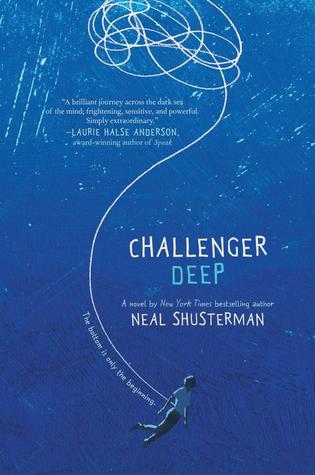
WAITING by Kevin Henkes and CHALLENGER DEEP by Neal Shusterman
As usual,
we had great food and thoughtful discussion at our last meeting. We began with
the picture book, Waiting by Kevin Henkes, and many of us stated that we
were 'still waiting' for a story. We knew the book had garnered a lot of
positive buzz as well as several 2016 children's book award honors, but -- we
spent our time trying to figure out why!?! We liked the illustrations,
especially the full-page spreads that showed the changing of the seasons as the
little figurines sat on the windowsill -- WAITING. We felt it was sad that
the little porcelain elephant, who was a newcomer to the scene, fell down and
shattered...we also felt that the owl looked a bit guilty! What we found
missing, besides an actual story, was any indication of the presence of a child
anywhere in that room. We also wondered how young children might react to
hearing this story read to them...it didn't seem to us that they would be
particularly thrilled, or even interested. Perhaps we were wrong.... but so it
goes.
We had a
great discussion of the novel, Challenger Deep by Neal Shusterman. We
all agreed that it was an incredible -- though sometimes very difficult to
read -- story, and that the writing was definitely deserving of the 2016
National Book Award for Young Adult Fiction that Shusterman received. Some
people had problems with switching back and forth in alternate
chapters between the real events in the main character, Caden's, life and
the fantasy world created by his mental illness, which took place on a pirate
ship as he attempted to travel to the deepest trench in the ocean -- something
with which the real Caden was obsessed. We appreciated the symbolism and
metaphors that were evident throughout, and we thought that the look into the mind
of a teenager suffering schizoaffective disorder was beautifully and
sensitively portrayed. We also liked the portrayal of a supportive family, and
especially Caden's little sister, who never gave up on him. We thought the way
the author ultimately brought Caden's two worlds together, with the help
of therapy and an appropriate drug combination as he was
hospitalized and began to heal was stellar. We had a detailed discussion about
mental illness itself, and its effect on the friends and families of the
affected person and the fact that -- at best -- no one really knows what's
going on in the affected person's head. We liked the inclusion of the drawings,
which were done by the author's son, Brendan, whose own story of affliction and
healing was the basis of the book. We thought the book was a great vehicle to
introduce this issue to YA readers (and adults!) and we appreciated the
extensive list of resources for students, parents, and teachers at the end of
the book.
Thursday, December 10, 2015
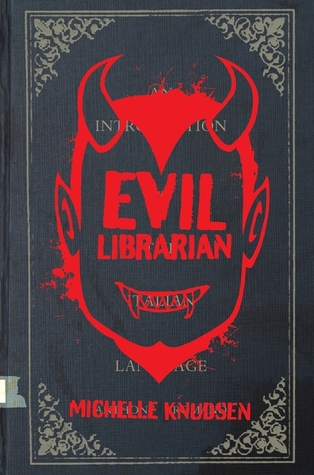
Evil Librarian by Michelle Knudsen and The Right Word: Roget and His Thesaurus by Jen Bryant
We had a delicious holiday dinner at our December meeting -- good
dishes provided by all of the attendees. Big YUMS all around!
We discussed Evil Librarian by Michelle Knudsen first.
Even though it won the SCBWI 2015 Sid Fleischman Award for Humor, each and every
one of us kept asking, "...but what was actually funny in this
book?" We'd love to have an answer from -- someone. Needless to say, we didn't
love the book. We mainly felt that the story was very contrived, and that the
main characters, Cyn and Ryan, were pretty much stick figures -- sort of like
those that Annie might draw. We felt that we knew very little about them or
their inner feelings, and it was just all very flat. Some folks said they got
tired of Cyn's 'gaga over Ryan' narrative. We did actually feel that the
portrayal of Annie may have been the strongest in the book. A couple of people
said that they thought the descriptions of the supernatural occurrences were
well written, and a strength of the book -- if the book had any strengths at
all. Several people said that they couldn't even finish it. We also discussed
why the author chose to have a school librarian (an endangered species!) be the
'bad guy'. Perhaps because this author also wrote Library Lion?....or
-- was it purely an editor/publisher's marketing decision? If anyone who reads
this blog can give some examples of humor in this book, we'd love to
know!
As for our picture book, The Right Word: Roget and his
Thesaurus, everyone liked it a lot; some of us loved it. We had quite a
discussion about the illustrations (by Melissa Sweet), with some folks stating that the
illustrations completely overpowered the text because of their details and
power, while others felt that the text was very strong and stood up on its own
as it described Roget's obsession with words and organizing them throughout his
life. We liked the 'end matter,' and were amazed to learn of all of the other
things Roget accomplished in his life. We agreed that it would be a great
read-aloud in a school setting, to introduce students to the Thesaurus. We also
felt that it would be a perfect companion to Jeri Chase Farris' Noah and his
Words, which we discussed in February 2013 and unanimously loved. We all
agreed that it was a neat book, and a great addition to the children's
literature field. (Note: No Thesauri were killed in the writing of this
re-cap!)
Thursday, October 29, 2015
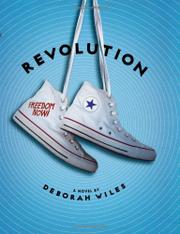
REVOLUTION by Deborah Wiles and SEPARATE IS NEVER EQUAL by Duncan Tonatiuh
We had a small group at our last meeting, and we unanimously loved Revolution by Deborah Wiles. We felt that the writing was exemplary, especially the beautiful phraseology she used without in any way ruining the voice of Sunny, the main character. We liked how the story was told from two points of view as Sunny, white, and Raymond, black, described the events that happened in their own lives in Greenwood, MS during Freedom Summer in 1964 when large numbers of young organized workers, black and white, came to the south from all over the United States to register black voters and to organize freedom schools. Interwoven with this important story was Sunny's wish to find her long, lost mother, and her interactions with various members of her family, including a new stepmother. We thought the plotting was excellent, and that the many pages of primary source materials, including song lyrics, pamphlets, photos, and other ephemera were especially helpful in understanding the era. We liked the inclusion of short accounts of the contributions of Pres. Lyndon B. Johnson's accomplishments, the story of the friendship between Polly Spiegel and Dorothy Height, and a discussion of the Viet Nam War. We were not sure if average young readers would automatically pick up this 544-page book, but we felt that with good book-talking by a teacher or a librarian they might try it, and that once they were 'into' the story they would stick with it.
We had varying opinions on Separate is Never Equal by Duncan Tonatiuh. We all thought this story of the original school desegregation case in Orange County, CA in 1947 which was a precursor to Brown v. Board of Education in 1954, was an important one that everyone should know. We agreed that the writing in this book was somewhat flat, although factual, as Sylvia Mendez's parents went to court so that Sylvia and her siblings could attend the 'white school,' which was in every way superior to the 'Mexican school' that they were forced to attend . . . not only visually, but also in terms of the education provided for the students. We were split in our opinions about the illustrations, even though they had won the Pura Belpre Award for illustration. Though he used art reminiscent of Mixtec codexes from Mexico, some of our members thought the illustrations were also flat and quite unexpressive, while others of us felt that they were excellent examples of Mexican culture and fit the story well. We felt that the book was certainly very accessible to young readers, and that they would learn a lot from reading it and possibly want to do more research on this issue.
Thursday, September 3, 2015
The Family Romanov by Candance Flemming and One Plastic Bag by Miranda Paul
We had a wonderful meeting this week, accompanied by several Russian-themed noshes for us to savor as we talked. We could not heap enough accolades on Candace Fleming's The Family Romanov. From the opening pages with the map of early twentieth-century Russia, the family tree showing (a lot of) inbreeding, including Hemophilia carriers, the excellent collection of photos, and the first-person narratives from people who were actually there, to the 99-item bibliography including primary and general sources, we agreed that this book was a definite tour-de-force. We all agreed that the writing almost made it seem like a novel -- and a love story at that -- and that the moving between the tsar's life with his family in the various palaces and what was going on with the 'real people' in Russia at the same time was beautifully done. We were astounded by Fleming's research, and all but two of us loved the first-person accounts that were placed throughout as incidents unraveled. One of our members felt that perhaps Fleming could have gone into greater depth about what happened after the Revolution, because it seemed that there weren't that many actual changes in the lives of the common people. But we ultimately agreed that The Romanovs were the focus, and to get too much into politics would have spoiled that focus. All in all, we found it to be an ultimately fascinating book, and we gave it a unanimous (and rare for us!) grade of 'A'.
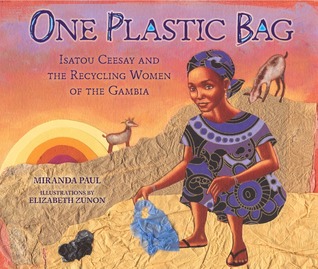
We had mixed feelings on the picture book One Plastic Bag by Miranda Paul. We all agreed that it was a useful book for young kids: an easily accessible story about the importance of recycling and cleaning up one's environment and how one person can make a difference. We had some problems with the writing, although one of our members felt it was perfect and quite poetic. We thought there were some awkward transitions as the story progressed, and some things that didn't quite flow smoothly as Isatou Ceesay and the women of her village began to crochet little purses from the discarded plastic bags that inundated their landscape. We loved some of the illustrations, but not all of them. We felt that the difference between the very flat collage of the women's dresses clashed with the almost photographic portrayal of the women themselves and was at times jarring. We thought this might be a typical type of Gambian folk art, but it didn't resonate with everyone. Although it didn't receive an 'A' we were all glad we had read it, and we were glad to know that the women continue to create and sell the purses which has created an important income flow and benefit to their community, including a library!
Subscribe to:
Posts (Atom)